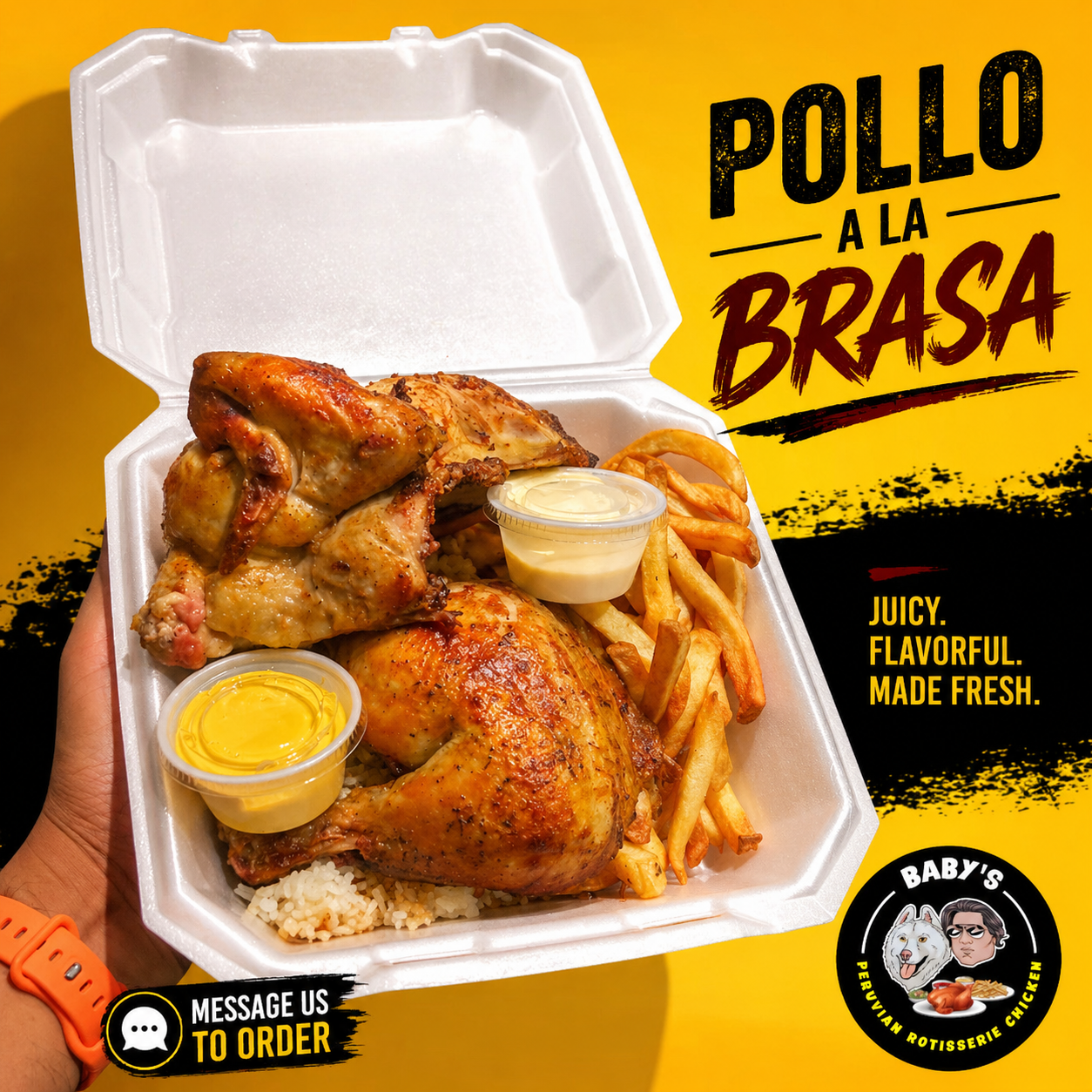
Let me tell you about one of the most bizarre and genius things I’ve stumbled across in the world of food, branding, and marketing. I recently uncovered what might just be Utah’s biggest food-related illusion—or marketing masterpiece. It’s the story of a creative agency that decided to hack the restaurant world without even opening one.
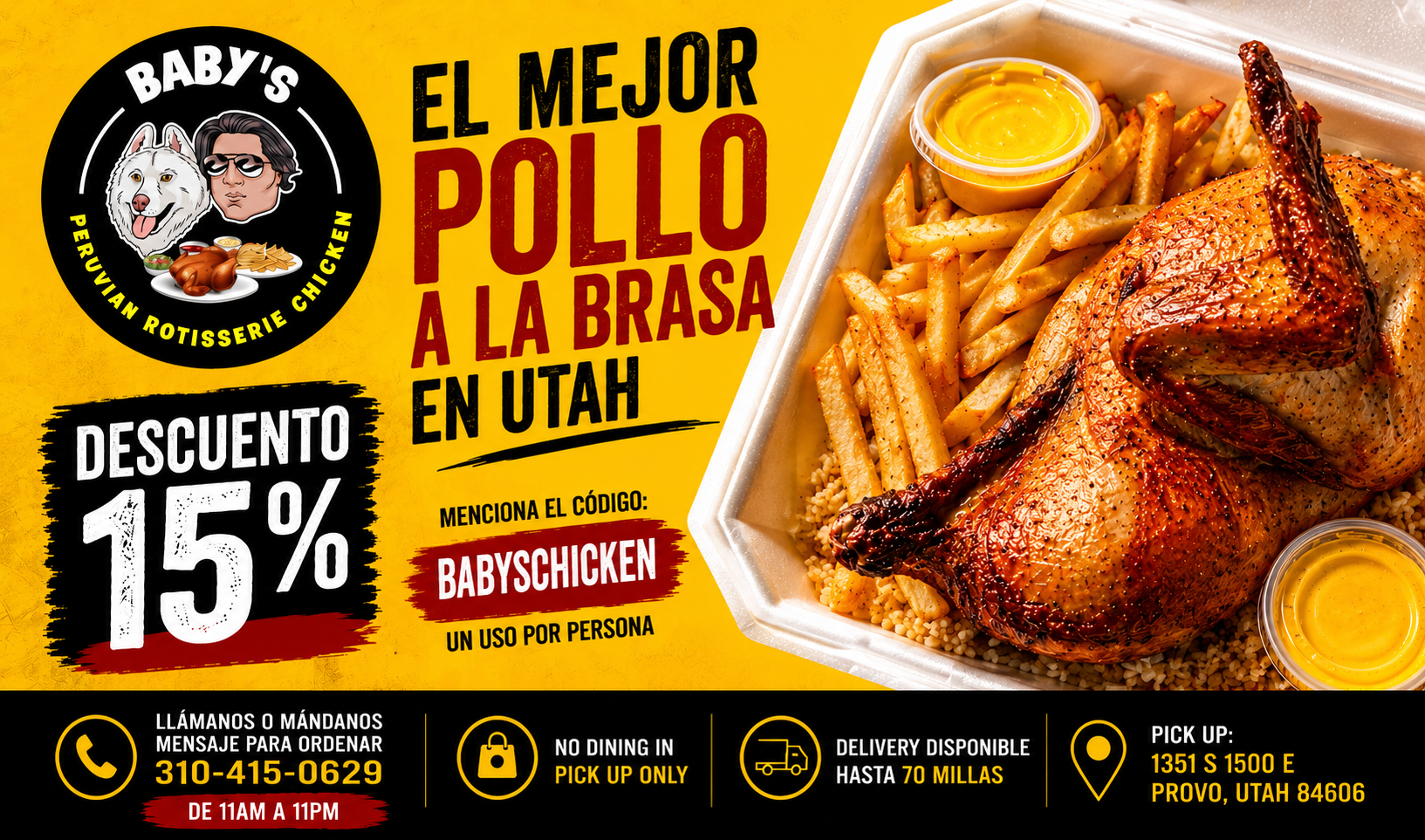
Yes, you read that right. They created what looks like a fully functioning, ultra-popular Pollo a la Brasa restaurant called Baby’s Peruvian Rotisserie Chicken. It has social media buzz, 5-star reviews, viral desserts like Dubai Chocolate Tres Leches and Strawberry Cups, music collabs, sleek branding, Google and Yelp presence, even a fanbase. But here’s the twist…
There’s no real sit-down restaurant—at least, not yet.
The Creative Heist
Behind Baby’s is a guerrilla marketing experiment turned viral. This wasn’t your typical ghost kitchen or food truck startup. It was a creative studio—a team of designers, marketers, and social media tacticians—who set out to answer a bold question:
Can we create the illusion of Utah’s most in-demand food spot using only digital marketing, aesthetics, storytelling, and strategy?
Turns out, yes. They built an entire online persona, launched pop-ups and takeout-only setups, planted curated reviews, created crave-worthy content, and turned their social media into a magnet for late-night food lovers and trend chasers. The hype? Unbelievable.
The Illusion That Worked
People have waited outside thinking it’s a full restaurant. Influencers are posting like they just discovered a hidden gem. And reviews rave about the juicy rotisserie chicken, decadent cakes, and perfectly seasoned fries—served out of what many assumed was a “real” restaurant. In reality, much of it was orchestrated from a creative control room.
It’s not a scam. It’s marketing warfare at its finest.
The Real Goal
The goal? To build a digital-first food brand with such a strong identity and online presence that when they finally open a full-scale restaurant, they won’t need to fight for visibility. The demand has already been created. They’ll open their doors not to curiosity—but to a crowd that’s been waiting.
If this is the future of food branding, we might need to rethink what it means to be a “real” restaurant. Baby’s didn’t start with four walls. It started with a strategy.
Are we eating the marketing?
_1749884352158.jpg?width=2420&height=1210&name=A-Sign%20Template%20(5)_1749884352158.jpg)